How does the country's only tinplate producer in Miory work?
The outgoing year has been truly momentous for the metal-rolling company in Miory: thanks to state support, instead of inevitable collapse, the team has gained confidence in the future.
The implementation of an innovative project in Miory promised phenomenal success, but LLC "MMPZ-Group" was unable to reach its design capacity of 150 thousand tons of products per year due to certain financial difficulties. Moreover, the process was completely suspended for some time. Employees received reduced wages, with delays, there was a shortage of raw materials for processing, loan debt grew, and hopes for success rapidly dwindled.

"An ideal enterprise has been driven into bankruptcy. We don't have such enterprises. This is a super-enterprise. Here, you just need to roll up your sleeves and produce, and sell," Alexander Lukashenko emphasized during his visit to the plant in August this year. Having carefully studied the state of affairs, at a meeting with the work collective, the Head of State assured: "We will not let any of you be offended. Therefore, you can work calmly. The plant will operate exactly as we once envisioned. This is the purpose of my visit. I want you to work, because you are the entire Miory region. If your plant works, it will pull the entire region up."
From November 15, the enterprise became state-owned, and OJSC "Beltsvetmet" was determined as its management company. Why is the plant now called a company, what are the complexities of the production process, and what does the rising cost of housing rent in Miory have to do with all this? All this is in the report by "SG" correspondents.
Miory Metal Rolling Plant, now renamed the Metal Rolling Company, is the only manufacturer of its kindthe production of tinplate in Belarus. Initially, it was oriented not so much towards the needs of the domestic market as towards export to CIS countries, Europe, and in the future, Asia and America. The plans were adjusted by sanctions, and today the enterprise's products lead the domestic market, leaving no more than 20 percent of the total production volume to other suppliers. Almost 80 percent of the produced tinplate goes to Russia.
The main producer of tinplate in Russia is PJSC Magnitogorsk Iron and Steel Works«mbіnat» — last year, it produced more than 155 thousand tons. Miory was also supposed to reach this level. And it will — specialists promise. Moreover, the possibility of increasing capacity to 240 thousand tons is being considered for the future.
The head of Metalloprokatnaya Company LLC, Vladimir Dyakonov, emphasizes that financial problems are inevitable in any production, but it is another matter to learn how to solve them:

— We faced difficulties, there was a shortage of working capital, but the work collective was determined. It is extremely difficult to make everything work and yield the desired result immediately. The allocated tranche for working capital allowed us to purchase the necessary amount of raw materials. Thanks to this, we were able to continue the commissioning process. That is, we have not yet reached the previously set production capacities, the issue will take time. The main thing is that thanks to the uncompromising position of the President and the help of the state, we have gained confidence in the future. This was very important for each of us. We are working and selling quality products.
In the interval between a video conference with potential partners and a meeting with technologists from Kaliningrad, Vladimir Dyakonov found time to meet with journalists. And the first thing that came up in conversation was the intricacies of the production process, the jewelry precision of metal stamping.

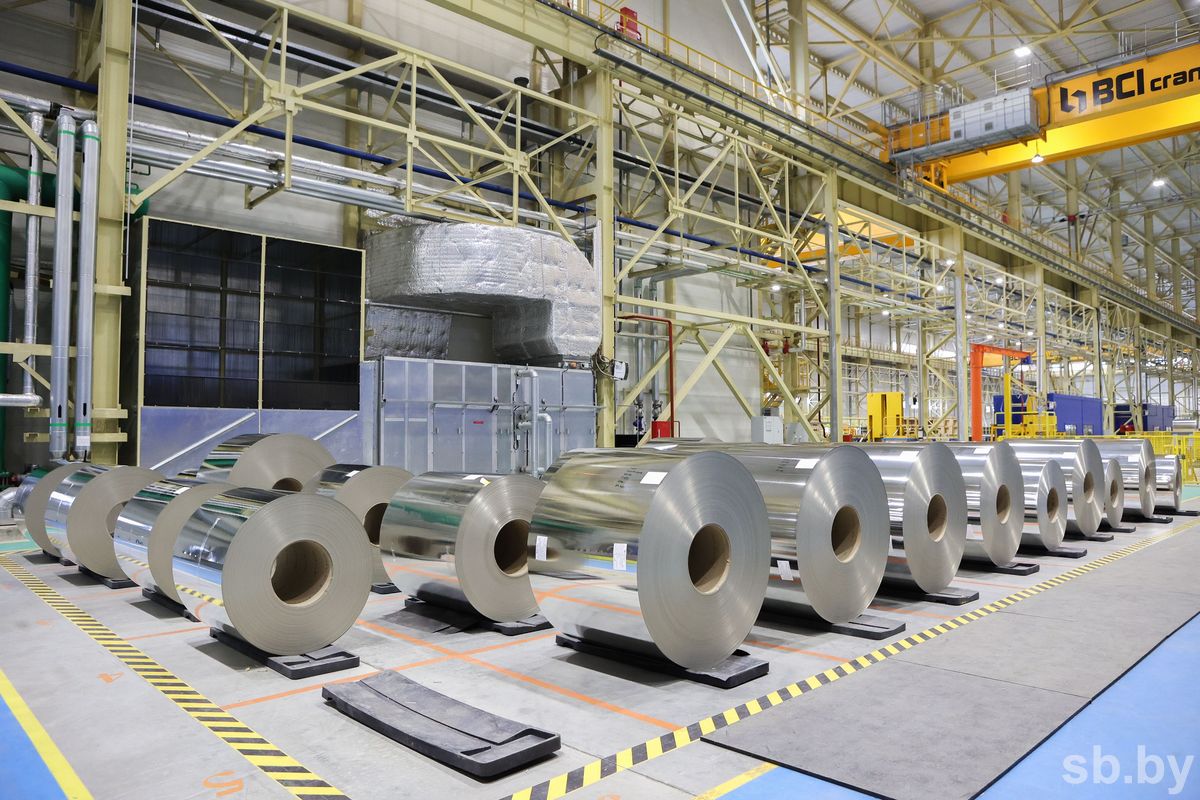
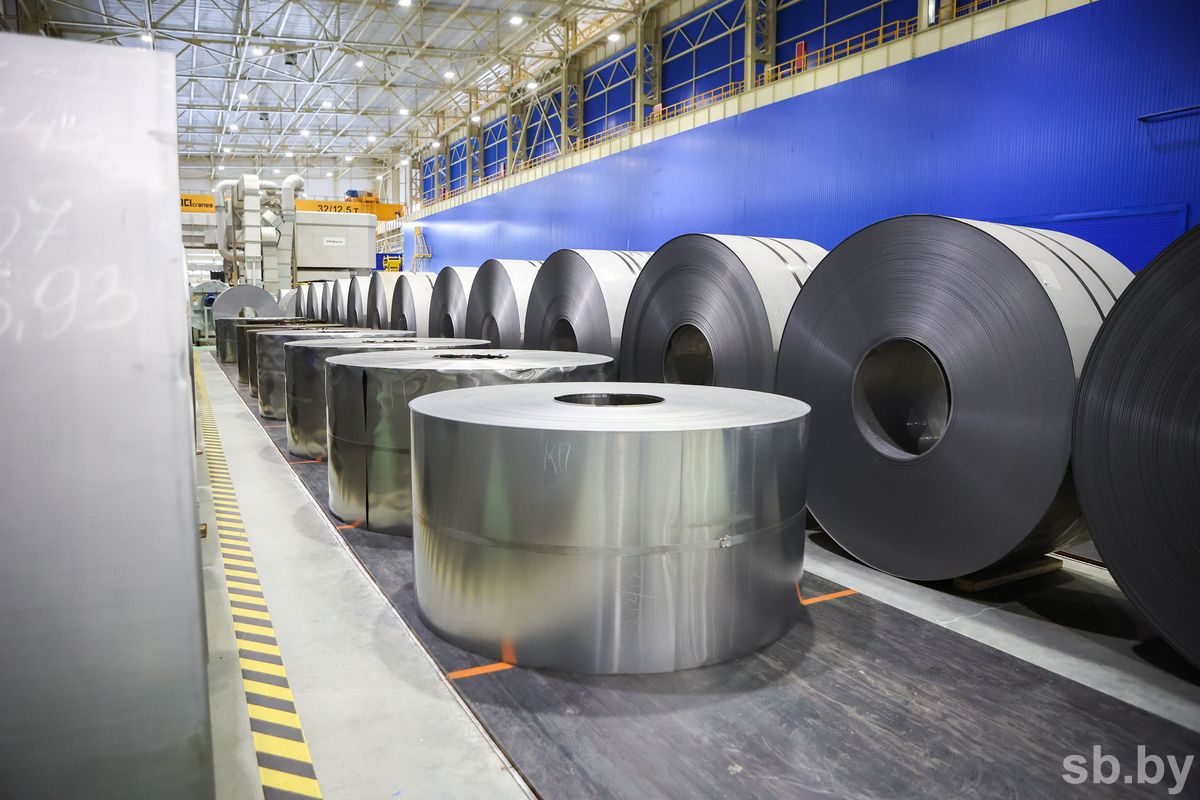
Looking at the neatly arranged steel coils, it's hard to believe that each of them weighs about 20 tons. And there are quite a few of them in the raw material warehouse – more than 20 thousand tons in total. This will be enough for uninterrupted operation at least until the end of March. If you unroll the skillfully twisted steel sheet, its length will reach a kilometer. After going through all the stages of the production chain, you will get literally the same coil, but it will already be ten kilometers long.
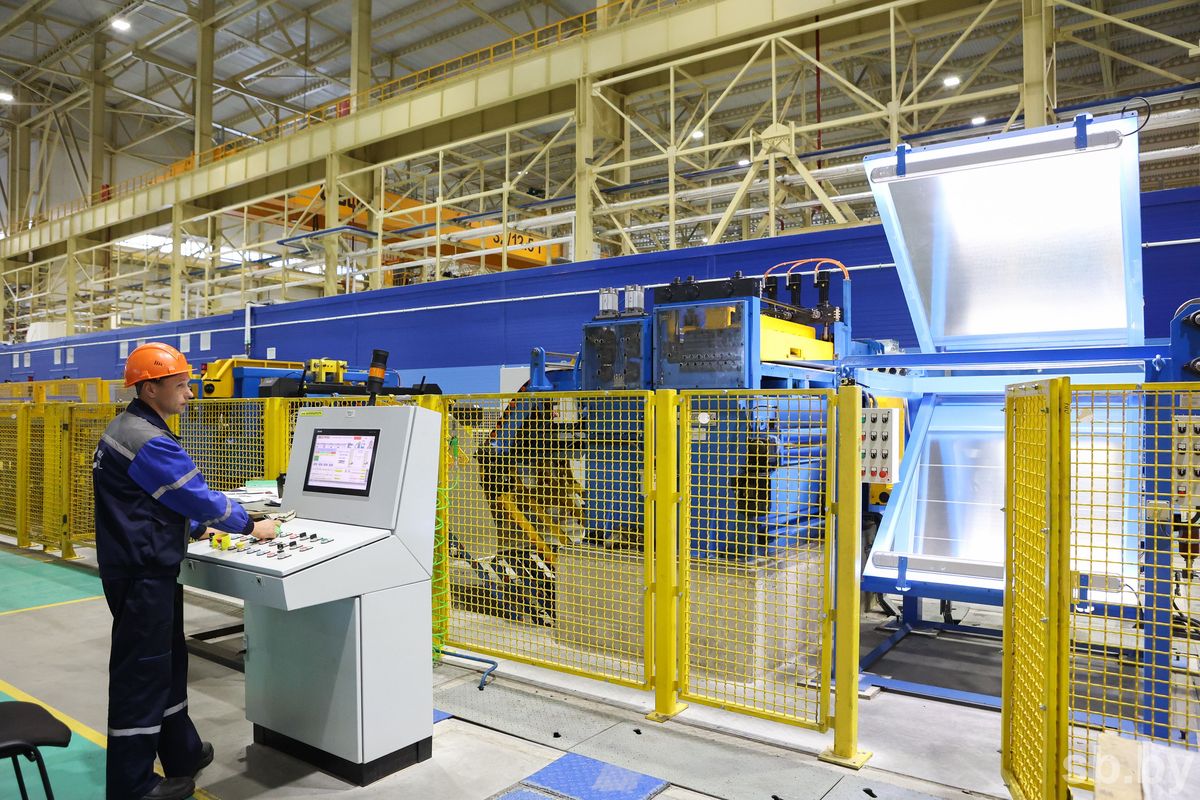
Is it easy to do? Not at all. Work in the workshop is organized in four shifts. The process is maximally mechanized, high-precision equipment allows for uniform rolling to the specified thickness. A tolerance of 0.005 millimeters is allowed. You won't notice it immediately, even with an instrument.

But, it turns out, this is not the limit either. The head of the production and dispatch department, Leonid Vlasenko, talks about the experiment carried out: the plant managed to obtain tinplate with a thickness of 0.09 millimeters. There is no demand for it yet, but the promising enterprise has the capabilities.
Seeing our amazement, Vladimir Dyakonov takes a small piece of white tinplate and easily cuts geometric shapes with ordinary scissors. Then he takes one small piece and folds it into a neat triangle.
— Try it yourself, but it's dangerous, you can get hurt, — warns Vladimir Anatolyevich. — Imagine the uniqueness of the process itself, because I am holding not a sheet of paper or foil, but metal. But it is so thin that it resembles a candy wrapper. And initially, the raw material we receive has a thickness of up to 2 millimeters. The process itself is interesting, I see how the workers' eyes light up when everything works out, when the workshop operates non-stop.

One cannot fail to mention the constant excursions to the plant. For example, the other day, a group of elderly citizens from the district center visited the enterprise. There were over 40 of them.
— We were still a private company, and people used to come to us. This is a kind of tradition. We consider every request, sometimes we refuse, but not this time. The production is dangerous, the health and safety of citizens are paramount, but at the same time, we are happy to show what we are proud of. First of all, of course, we are focused on the youth. This is our future. The President, when he visited the plant, specifically noted that if the state helps us with the resolution of emerging financial issues, and thank you for that.so vast, then we must train top-tier personnel ourselves. And we do.
Where? After all, there are no specialized faculties in the country focused on the production of such unique products.
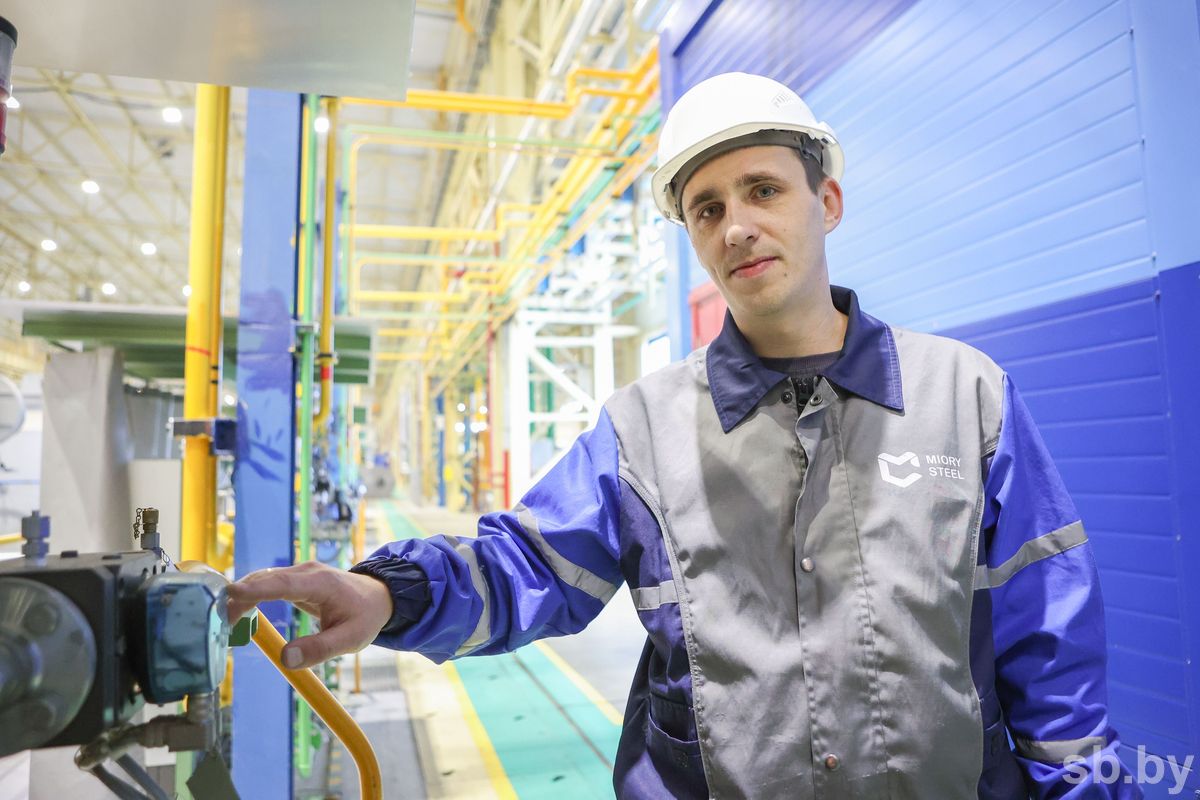
— But that doesn't mean we can't train them ourselves. We teach, we explain, we show. It's difficult, but, as I've said before, it's interesting. Today, the enterprise employs natives not only from Miory but also from Verkhnedvinsk, Sharkovshchina, Glubokoye, and other districts of the Vitebsk region, and the country. Moreover, we have a cohesive team of specialists, including those from Russia, Ukraine, and Kazakhstan.
— The team is international, perhaps that's where the strength lies. We don't rest on our laurels; we look for new options. We have a new chance to achieve our goal, and we cannot miss it, — says Vladislav Avdeev, Deputy Director for Technology and Quality, joining the conversation (by the way, he came from Kazakhstan). Vladimir Dyakonov from Magnitogorsk worked at the "Magnitka," as the metallurgical plant is also called, for many years. Leonid Vlasenko from Cherepovets previously worked at PJSC Severstal, which, by the way, is also the source of the raw materials.
However, not all problems have been resolved yet. According to the technology, the annealing of metal must occur in a pure hydrogen environment. The failure of the hydrogen unit did not become a reason to stop production. Specialists developed their own method – using nitrogen. For the first time in the world, white tinplate is produced in a nitrogen environment.
— This is temporary. The productivity of the hydrogen unit, which is still under repair, is higher, and the metal surface is cleaned in parallel, — summarizes Leonid Vlasenko. — We need to increase volumes; there are plenty of orders not only for December but also for January.
The panoramic view from above of the operating lines is mesmerizing. Straight ahead are funny caps. They appear small from a distance. They are located in a recess. These are the very bell-type furnaces designedfor annealing metal. At temperatures above 600 degrees, the hardness of steel decreases, and its plasticity is restored to the required level. The thinner and stronger the tinplate produced, the more effectively the material is used in the production of tin cans. Such properties of tinplate are achieved through subsequent technological operations – tempering and double rolling.
The culmination of the technological process is the electrolytic tinning line. It is at this stage that blackplate is transformed into tinplate. Tin coating is used for this purpose. The final stage is the cutting and packaging line.
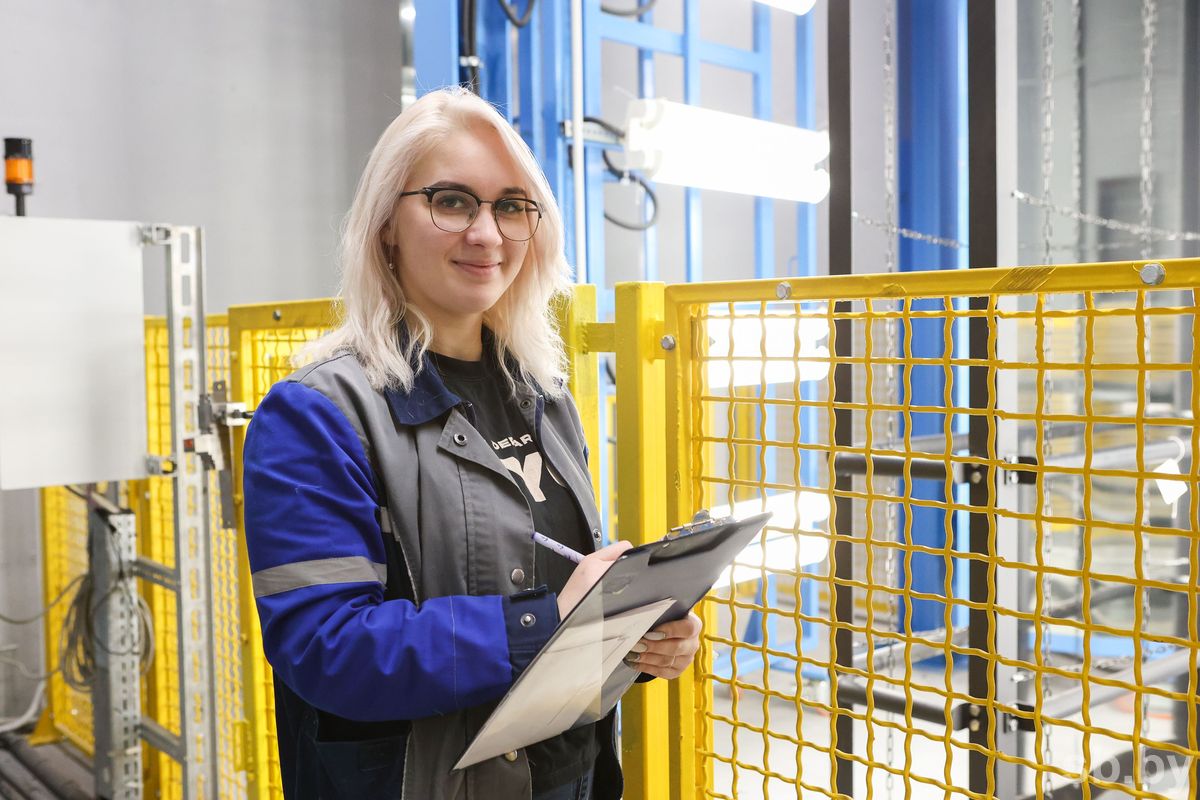
Among the workshop employees with whom we managed to communicate were former bank employees, a music teacher, and representatives of other professions. However, the senior master of the cleaning and tinning section, Andrey Kosnikovsky, previously worked as chief power engineer in one of the farms in the Miory district.


COMMENT:
— Even at the construction stage, the plant attracted attention as a major investment project, a unique initiative for Belarus and the CIS countries. We hope that the temporary difficulties are behind us. The enterprise is gaining momentum, it is not operating at full capacity, so it is too early to talk about its significance for the region's economy. Most importantly, thanks to the enterprise, over 600 jobs have been created, which has contributed to the influx of new people into the district and stimulated the development of the social sphere, — emphasizes the Deputy Chairman of the Miory District Executive Committee, Elena Shalonko.



The implementation of an innovative project in Miory promised phenomenal success, but LLC "MMPZ-Group" was unable to reach its design capacity of 150 thousand tons of products per year due to certain financial difficulties. Moreover, the process was completely suspended for some time. Employees received reduced wages, with delays, there was a shortage of raw materials for processing, loan debt grew, and hopes for success rapidly dwindled.
"An ideal enterprise has been driven into bankruptcy. We don't have such enterprises. This is a super-enterprise. Here, you just need to roll up your sleeves and produce, and sell," Alexander Lukashenko emphasized during his visit to the plant in August this year. Having carefully studied the state of affairs, at a meeting with the work collective, the Head of State assured: "We will not let any of you be offended. Therefore, you can work calmly. The plant will operate exactly as we once envisioned. This is the purpose of my visit. I want you to work, because you are the entire Miory region. If your plant works, it will pull the entire region up."
From November 15, the enterprise became state-owned, and OJSC "Beltsvetmet" was determined as its management company. Why is the plant now called a company, what are the complexities of the production process, and what does the rising cost of housing rent in Miory have to do with all this? All this is in the report by "SG" correspondents.
Miory Metal Rolling Plant, now renamed the Metal Rolling Company, is the only manufacturer of its kindthe production of tinplate in Belarus. Initially, it was oriented not so much towards the needs of the domestic market as towards export to CIS countries, Europe, and in the future, Asia and America. The plans were adjusted by sanctions, and today the enterprise's products lead the domestic market, leaving no more than 20 percent of the total production volume to other suppliers. Almost 80 percent of the produced tinplate goes to Russia.
The main producer of tinplate in Russia is PJSC Magnitogorsk Iron and Steel Works«mbіnat» — last year, it produced more than 155 thousand tons. Miory was also supposed to reach this level. And it will — specialists promise. Moreover, the possibility of increasing capacity to 240 thousand tons is being considered for the future.
The head of Metalloprokatnaya Company LLC, Vladimir Dyakonov, emphasizes that financial problems are inevitable in any production, but it is another matter to learn how to solve them:
— We faced difficulties, there was a shortage of working capital, but the work collective was determined. It is extremely difficult to make everything work and yield the desired result immediately. The allocated tranche for working capital allowed us to purchase the necessary amount of raw materials. Thanks to this, we were able to continue the commissioning process. That is, we have not yet reached the previously set production capacities, the issue will take time. The main thing is that thanks to the uncompromising position of the President and the help of the state, we have gained confidence in the future. This was very important for each of us. We are working and selling quality products.
In the interval between a video conference with potential partners and a meeting with technologists from Kaliningrad, Vladimir Dyakonov found time to meet with journalists. And the first thing that came up in conversation was the intricacies of the production process, the jewelry precision of metal stamping.
Looking at the neatly arranged steel coils, it's hard to believe that each of them weighs about 20 tons. And there are quite a few of them in the raw material warehouse – more than 20 thousand tons in total. This will be enough for uninterrupted operation at least until the end of March. If you unroll the skillfully twisted steel sheet, its length will reach a kilometer. After going through all the stages of the production chain, you will get literally the same coil, but it will already be ten kilometers long.
Is it easy to do? Not at all. Work in the workshop is organized in four shifts. The process is maximally mechanized, high-precision equipment allows for uniform rolling to the specified thickness. A tolerance of 0.005 millimeters is allowed. You won't notice it immediately, even with an instrument.
Nowadays, tinplate is actively used for packaging in the food, perfumery, and paint industries. Now, container manufacturers are switching to using thinner tinplate. The equipment installed half a century ago at enterprises in Russia and CaKazakhstan, allows for the production of tinplate with a thickness of 0.18 millimeters. In Miory, modern technologies make it possible to obtain tinplate with a thickness of 0.1 millimeters.
But, it turns out, this is not the limit either. The head of the production and dispatch department, Leonid Vlasenko, talks about the experiment carried out: the plant managed to obtain tinplate with a thickness of 0.09 millimeters. There is no demand for it yet, but the promising enterprise has the capabilities.
Seeing our amazement, Vladimir Dyakonov takes a small piece of white tinplate and easily cuts geometric shapes with ordinary scissors. Then he takes one small piece and folds it into a neat triangle.
— Try it yourself, but it's dangerous, you can get hurt, — warns Vladimir Anatolyevich. — Imagine the uniqueness of the process itself, because I am holding not a sheet of paper or foil, but metal. But it is so thin that it resembles a candy wrapper. And initially, the raw material we receive has a thickness of up to 2 millimeters. The process itself is interesting, I see how the workers' eyes light up when everything works out, when the workshop operates non-stop.
One cannot fail to mention the constant excursions to the plant. For example, the other day, a group of elderly citizens from the district center visited the enterprise. There were over 40 of them.
— We were still a private company, and people used to come to us. This is a kind of tradition. We consider every request, sometimes we refuse, but not this time. The production is dangerous, the health and safety of citizens are paramount, but at the same time, we are happy to show what we are proud of. First of all, of course, we are focused on the youth. This is our future. The President, when he visited the plant, specifically noted that if the state helps us with the resolution of emerging financial issues, and thank you for that.so vast, then we must train top-tier personnel ourselves. And we do.
Where? After all, there are no specialized faculties in the country focused on the production of such unique products.
— But that doesn't mean we can't train them ourselves. We teach, we explain, we show. It's difficult, but, as I've said before, it's interesting. Today, the enterprise employs natives not only from Miory but also from Verkhnedvinsk, Sharkovshchina, Glubokoye, and other districts of the Vitebsk region, and the country. Moreover, we have a cohesive team of specialists, including those from Russia, Ukraine, and Kazakhstan.
— The team is international, perhaps that's where the strength lies. We don't rest on our laurels; we look for new options. We have a new chance to achieve our goal, and we cannot miss it, — says Vladislav Avdeev, Deputy Director for Technology and Quality, joining the conversation (by the way, he came from Kazakhstan). Vladimir Dyakonov from Magnitogorsk worked at the "Magnitka," as the metallurgical plant is also called, for many years. Leonid Vlasenko from Cherepovets previously worked at PJSC Severstal, which, by the way, is also the source of the raw materials.
However, not all problems have been resolved yet. According to the technology, the annealing of metal must occur in a pure hydrogen environment. The failure of the hydrogen unit did not become a reason to stop production. Specialists developed their own method – using nitrogen. For the first time in the world, white tinplate is produced in a nitrogen environment.
— This is temporary. The productivity of the hydrogen unit, which is still under repair, is higher, and the metal surface is cleaned in parallel, — summarizes Leonid Vlasenko. — We need to increase volumes; there are plenty of orders not only for December but also for January.
The panoramic view from above of the operating lines is mesmerizing. Straight ahead are funny caps. They appear small from a distance. They are located in a recess. These are the very bell-type furnaces designedfor annealing metal. At temperatures above 600 degrees, the hardness of steel decreases, and its plasticity is restored to the required level. The thinner and stronger the tinplate produced, the more effectively the material is used in the production of tin cans. Such properties of tinplate are achieved through subsequent technological operations – tempering and double rolling.
The culmination of the technological process is the electrolytic tinning line. It is at this stage that blackplate is transformed into tinplate. Tin coating is used for this purpose. The final stage is the cutting and packaging line.
Among the workshop employees with whom we managed to communicate were former bank employees, a music teacher, and representatives of other professions. However, the senior master of the cleaning and tinning section, Andrey Kosnikovsky, previously worked as chief power engineer in one of the farms in the Miory district.
— I have been at the plant for three years now, I started as a control post operator. Like many of our employees, I went for training in Magnitogorsk. The equipment is complex, you are constantly learning something new. They try not to dwell on the period when production was temporarily stopped. After all, we were still in the workshop, engaged in commissioning work. We received salaries, but they were not as high as before. We believed that everything would get better. And now, for a month, the enterprise has become state-owned. This has not affected the production process in any way; we are working as before. There is enough raw material, there are orders, and there is plenty of desire to work. And this means there will be success.The name has changed: it was a plant, and now it is a company. The labor collective and the production of tinplate remain the same. Employees note excellent working conditions, and comfortable housing is provided to newcomers: apartments in a multi-story building, as well as apartmentsthree eight two-story houses. And most importantly, the average salary has grown to 1.7 thousand rubles. By the way, it was this factor that contributed to the increase in rental housing prices in the district center. In general, the city, like the district, has come alive thanks to the plant, and additional development prospects have appeared.
COMMENT:
— Even at the construction stage, the plant attracted attention as a major investment project, a unique initiative for Belarus and the CIS countries. We hope that the temporary difficulties are behind us. The enterprise is gaining momentum, it is not operating at full capacity, so it is too early to talk about its significance for the region's economy. Most importantly, thanks to the enterprise, over 600 jobs have been created, which has contributed to the influx of new people into the district and stimulated the development of the social sphere, — emphasizes the Deputy Chairman of the Miory District Executive Committee, Elena Shalonko.