Tourism
Presentation: Vitebsk Region
- Types of Tourism
- Tour Guides, Rules for Excursion Services
- Calendar of Tourist Events
- Tourist Information Centers of Vitebsk Region
- Humanitarian Cooperation
- Cooperation Partners
- Real estate objects of social and historical-cultural significance offered for sale at auction or for gratuitous transfer for the implementation of an investment project for the development of tourism in the Vitebsk region
The Vitebsk region is located in the north of Belarus, in the very center of Europe. The area of the territory is 40 thousand sq. km.
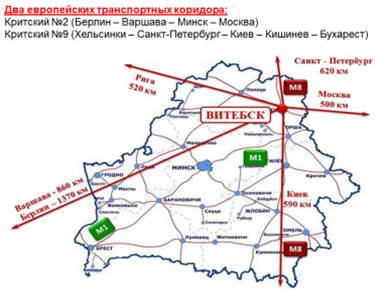
Considering its geographical location, the Vitebsk region has developed road and rail transport links with many countries. Its territory includes transport arteries connecting the largest and most developed economic regions of Russia with Europe. Two European transport corridors run through the region: Cretan No. 2 (Berlin – Warsaw – Minsk – Moscow), connecting Germany, Poland, Belarus, and Russia. Cretan No. 9 (Helsinki – St. Petersburg – Kyiv – Chisinau – Bucharest), connecting Finland, Lithuania, Russia, Belarus, Ukraine, Moldova, Romania, Bulgaria, and Greece.
44 republican highways run through the region, which are equipped with a dense network of roadside service facilities offering travelers a wide range of services: refueling, rest, food, accommodation, and the purchase of various goods.
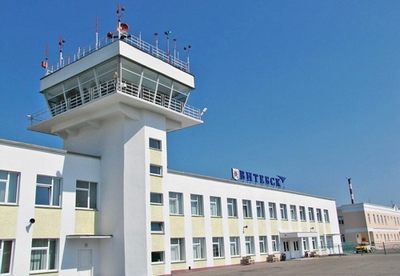 Vitebsk "Vostochny" International Airport provides airlines with a full range of airport services.
The airport has a certificate from the International Civil Aviation Organization ICAO and Category IV "B" – a permit for the operation of an airfield in limited meteorological conditions.
The regional center is the ancient Belarusian city of Vitebsk. The birth of Belarusian statehood, culture, and spirituality is associated with the even more ancient city of Polotsk, first mentioned in chronicles in 862 AD. The ancient cities of Orsha, Braslav, Postavy, Glubokoye, etc., are also well-known as fortresses or major trading centers.
Vitebsk region has significant potential for tourism development. Primarily, educational, ecological, health-improving, rural, pilgrimage, and transit tourism. The cultural and historical heritage accumulated over centuries is of international interest, and the ecological systems and natural landscapes located in the region are unique.
Cultural and Educational Tourism
Vitebsk region boasts over 3,000 monuments of archaeology, architecture, history, art, and culture, with about 1,000 included in the list of historical and cultural values of the Republic of Belarus. These include ancient settlements and burial mounds, old manors, majestic temples, and architectural ensembles of the ancient cities of Vitebsk, Polotsk, Postavy, and Glubokoye.
The total number of historical and cultural heritage sites included in the State List of Historical and Cultural Values of the Republic of Belarus is 957. Vitebsk region ranks second in the republic in terms of the number of historical and cultural values. Three architectural monuments have the "zero" (category "0") highest category of value (the Church of St. John the Baptist in the village of Kamai, Postavy district, the Saint Sophia Cathedral and the Transfiguration Church in the city of Polotsk).
In 2019, by a decision of the regional council of deputies, three tangible objects were included in the State List: the monument to the Battle of 1812 in the agro-town of Vorony, Vitebsk district, the monument "Surazh Gate" in the village of Zapolye, Vitebsk district, and the Shukhov water tower in the agro-town of Zvenyachi, Tolochin district.
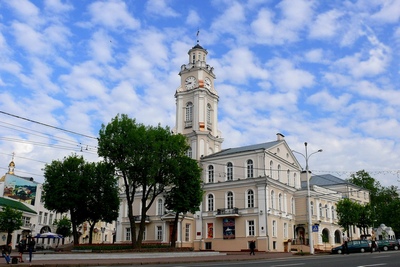 The architectural symbol of ancient Vitebsk is the City Hall, built in 1775. Today, the Vitebsk Regional Museum of Local Lore is housed in the City Hall building. The Vitebsk City Hall is surrounded by a unique architectural ensemble of the old town. A unique atmosphere reigns here, with narrow streets, old houses, lanterns, golden church domes, the embankment, and the quiet, smooth waters of the Dvina River. City guests, tourists, and travelers can admire the city panorama from a bird's-eye view by ascending to the 40-meter height of the City Hall tower, experiencing incomparable, breathtaking emotions.
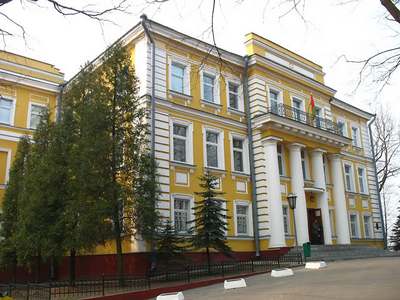
In the square of the Heroes of the Patriotic War of 1812, there is the Governor's Palace, an architectural monument of the 19th century. 200 years ago, Emperor Napoleon Bonaparte of France stayed and lived here. It was here that he awaited ambassadors from Alexander I and made the fateful decision to march on Moscow.
The Vitebsk region is proud of the names of famous natives who have left their mark on world culture: Saint Euphrosyne of Polotsk, the first printer Francis Skaryna, the enlightener and medieval poet Simeon Polotsky, the artist Ivan Khrutsky, the Belarusian writers Vasil Bykov and Vladimir Korotkevich, the famous explorer of Eastern Siberia Ivan Chersky, and many others. And of course, Marc Chagall, an artist, graphic designer, and painter of world renown. He carried his love for his native land throughout his life, and wherever he was, in St. Petersburg, New York, or Paris, his heart was filled with the colors of Vitebsk, which the master transferred to his great canvases.
The city has many interesting places associated with the name of Marc Chagall: The Marc Chagall Art Center, which houses
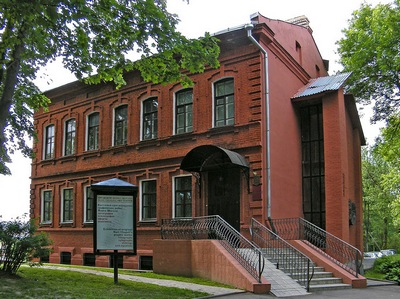 a large collection of the master's original print graphics, the building of the art school where the artist taught. But the main thing in Vitebsk is something that no other museum in the world has – the house on Pokrovskaya Street, where Chagall spent his childhood and youth, which now houses the Marc Chagall House-Museum. For its beauty and uniqueness, Marc Chagall later called Vitebsk his second Paris, and Paris – "my second Vitebsk."
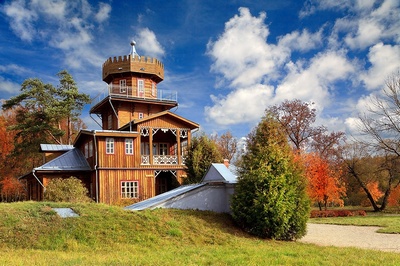
The great Russian painter Ilya Repin also left his mark on the history of the Vitebsk region. The museum-estate "Zdravnevo," where the artist lived and worked, houses a museum exhibition. The picturesque places on the banks of the Dvina River, the linden alley, ancient trees, and the unusual architecture of the estate in Zdravnevo attract tourists from all over the world. International plein airs, exhibitions, folk festivals, musical evenings, and even theatrical performances are held here.
The museums and art galleries of the Vitebsk region open unique collections and exhibits, interesting assemblies, and original collections to visitors, including priceless works of art and true rarities.
Postavy is one of the ancient cities of the Vitebsk region, most frequently visited by tourists. Among its main attractions is the Tyszkiewicz Palace, an architectural monument of the first half of the 19th century.


St. Sophia Cathedral in Polotsk, an architectural monument of the 11th-18th centuries, is the pearl of Belarusian architecture. It is the oldest stone religious building, created in the Byzantine style. For nine centuries, it has stood on the banks of the Western Dvina and amazes with its beauty and grandeur. Currently, the Polotsk St. Sophia Cathedral building houses a concert hall. Organ music concerts are held here. St. Sophia Cathedral is a symbol of the rich historical and cultural traditions of the Vitebsk region (included in the preliminary UNESCO World Heritage List).


Pilgrimage Tourism
The Vitebsk region is a special spiritual and cultural region, which is geographically and historically located at the confluence of Western and Eastern European cultures. Traditions intertwine here, and different nationalities and religious denominations coexist peacefully. Each denomination has created a spiritual heritage and temples, many of which are masterpieces of religious architecture and are part of the golden fund of the nation's culture. There are temples, churches, and chapels of amazing beauty here. There are almost 400 of them, of which 100 are historical and cultural heritage sites. In small villages and large cities, ancient and revived, wooden and stone, small and cozy, and majestic, solemn – architectural masterpieces. The Vitebsk region is proud of its spiritual and historical heritage. It has become a true mecca for tourists. Today, pilgrimage and educational tours are particularly popular.
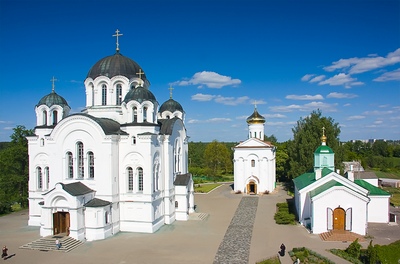
Saint Euphrosyne Monastery in Polotsk is the oldest functioning monastery in Belarus. A true center of Orthodoxy. Founded in the 12th century. Thousands of tourists and pilgrims from all over the world flock to the ancient monastery to venerate the relics of Saint Euphrosyne and the cross, a sacred shrine and a symbol of the revival of Belarusian spirituality. The Church of the Transfiguration is located in the center of the monastery complex. Built in the mid-12th century by the Polotsk architect Ioann by order of Abbess Euphrosyne of Polotsk. The temple is a true architectural masterpiece. Its interior is decorated with unique frescoes from the 12th century. The Church of the Transfiguration is included in the preliminary list of UNESCO World Heritage sites.
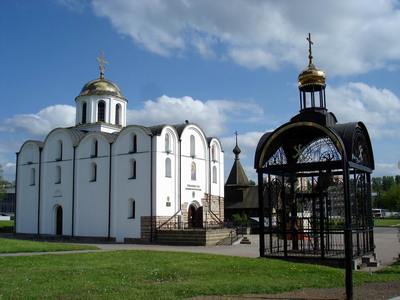
Annunciation Church in Vitebsk. A monument of ancient Russian architecture. It was built in the 12th century and became the first stone church in Vitebsk. It was erected by Byzantine masters and has no analogues in ancient Russian architecture. Today, fragments of unique ancient masonry remain open on the white walls of the church. One can truly touch antiquity with their hand.
Many Vitebsk churches became unique thanks to the architectural style of Vilna Baroque, which was characterized by the sophistication of proportions, lightness and intricacy of buildings, lush facade decor, and a variety of interior finishes.


as well as the St. Anne's Church and the landscape and park complex in the village of Mosar, Glubokoye district, which numerous tourists and guests call the "Belarusian Versailles."

Health Tourism
The nature of the Vitebsk region, impressive in its beauty and diversity, provides favorable conditions not only for a memorable vacation but also for effective treatment.
The advantage of our sanatoriums over similar ones in other countries is the good value for money, modern medical facilities, and highly qualified specialists. Here, the widest range of services for the treatment and recovery of respiratory and digestive organs, nervous system and musculoskeletal diseases, gynecology, and urology is presented. In addition to health improvement services, dentistry, cosmetology, and SPA treatments are offered.
The health resorts of the Vitebsk region are located in ecologically clean zones, surrounded by mixed and pine forests, on the banks of deep rivers and crystal-clear lakes. Nature itself is a healing factor for the human body. The moderately continental climate of the Vitebsk region, with its mild and humid winter and warm summer, is conducive to recreation and recovery all year round.
The complex of natural and climatic therapeutic factors includes a dozen sources of mineral waters, which are used in the treatment of a wide range of diseases. Some of them are analogues of the mineral waters of the Truskavets and Druskininkai resorts, while others are similar in composition to Alma-Ata and Georgian Skur. Radon baths are used for balneotherapy. Therapeutic sapropel mud from its own deposits in Belarus, as well as mineral sulfide mud from Lake Saki, are widely used for treating a number of diseases and in cosmetology. In our sanatoriums, speleotherapy facilities are represented by complexes made of white and red salt blocks from the Soligorsk potash mines, one of the world's leading producers of potash mineral fertilizers, JSC "Belaruskali". In such facilities, patients receive highly effective treatment similar to that in healing salt caves with a unique composition of natural salt aerosol combined with "red" and "white" salt.

Sanatoriums particularly popular with vacationers include:
- "Letzy" Federation of Trade Unions of the Republic of Belarus UP "Belprofsoyuzkurort"
- State Institution "Lepel Military Sanatorium of the Armed Forces of the Republic of Belarus"
- State Institution "Borovoe" of the Administrative Department of the President of the Republic of Belarus
- "Lesnye Ozera" UP of the Federation of Trade Unions of the Republic of Belarus
- State Institution of the Committee for State Security of the Republic of Belarus "Lesnoe"
- "Naftan" OJSC "Naftan"
- Children's sanatorium "Rosinka" of the sanatorium-resort enterprise OJSC "Belagrozdrawnica"
- State Unitary Enterprise Children's Rehabilitation and Health Center "Zhemchuzhina"
- Branch of CJSC "Trestpromstroy" Sanatorium-Resort Complex "Plissa"
Agroecotourism
Agroecotourism is one of the most popular tourist destinations in our country. Agrotourism business in Belarus has received significant state support. In the Vitebsk region, over 600 estates hospitably welcome tourists from different countries.
The advantageous geographical location of the Vitebsk region, the beauty of nature, the unique Belarusian folklore, holidays, rituals, traditions, national Belarusian cuisine, and a warm, hospitable welcome – all this leaves indelible impressions and emotions for guests.

In rural estates, they bake fragrant bread, weave from flax, weave from willow and straw, mold clay jugs, and felt wool. And this is just a small part of what awaits vacationers. Fresh air and pristine nature, comfortable living conditions, and a unique atmosphere of rural life. The estates are well-appointed with national flavor and coziness. All the necessary conditions for a good rest are created here.
Agrotourism estates of the Vitebsk region are open to travelers!
Ecotourism

Currently, the following protected areas are registered in the Vitebsk region: the State Environmental Institution "Berezinsky Biosphere Reserve" (hereinafter referred to as the Berezinsky Reserve), the State Environmental Institution "Braslav Lakes National Park", the State Environmental Institution "Narochansky National Park" (partially), 25 republican significance reserves, 86 republican significance monuments, 63 local significance reserves, and 141 local significance monuments. The total area of protected natural areas in the Vitebsk region is 392.3 thousand hectares, or 9.79 percent of the total area of the region.
In Belarus, the potential of protected lands and the development of ecotourism have only recently begun to be utilized. It is particularly relevant for our region. It is here that the only Reserve in the republic and the largest raised bog are located. On specially protected territories, tourists are offered a range of services: walks along ecological trails, on snowshoes and a swamp vehicle, horseback riding, photo hunting – birdwatching, etc.
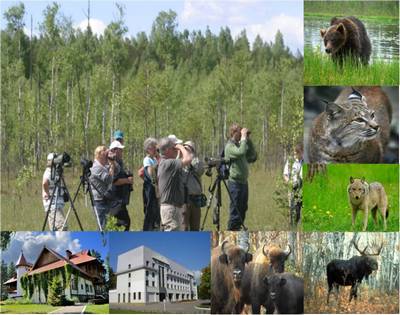
The State Nature Reserve Fund of the Vitebsk region includes over 300 objects, 200 natural monuments, 88 sanctuaries, 2 national parks, and the only Berezinsky Biosphere Reserve in Belarus.
This is one of the oldest protected areas in Europe, preserved in its almost pristine state, and the only place in Europe where the "Big European Five" large mammals – elk, bison, bear, wolf, and lynx – inhabit a single compact territory in the wild. It is home to one-third of the Belarusian bear population. Ecological routes and trails run through all the natural complexes of the reserve: forests, meadows, bogs, rivers, and lakes. The reserve's territory houses a nature museum and an environmental education center. For the convenience and comfort of tourists, there are hotel complexes, guest houses, restaurants, bars, and banquet halls.
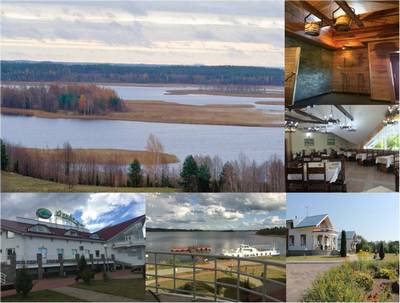
Braslav Lakes National Park is a unique corner of Belarusian nature. It is famous for the extraordinary beauty of its natural landscapes and lakes. The largest "Braslav Lake Group" in the country is concentrated here, rare species of forest animals listed in the Red Book inhabit it, as well as about 200 species of birds. The Braslav Lakes are rich in diverse fish. Thousands of tourists vacation in these protected areas every year. On the territory of the National Park, European-class recreation centers are equipped: "Zolovo", "Leoshki", "Drivyaty", decorated with national flavor, holiday cottages, health complexes with swimming pools, saunas, and baths. Excursion programs are of great interest. The National Park has many archaeological monuments, original folk architecture, and a museum. Hiking, water, cycling, and car routes have been developed.
Also, on the territory of the National Park, there are hunting grounds and all types of services for hunting and fishing are organized.
Hunting Tourism
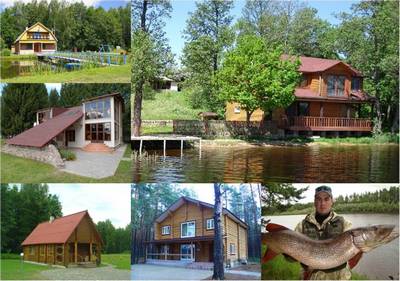
The forest wealth of the Vitebsk region contributes to the development and popularity of hunting tourism. There are over 60 hunting grounds in the Vitebsk region, leasing hunting grounds with a total area of 3.5 million hectares and providing a full range of services for receiving and accommodating guests, from issuing entry visas and obtaining permits for importing and exporting hunting weapons to organizing tourist services for citizens of Belarus and foreign tourists.
They have created all the conditions for successful hunting (all types and methods are practiced), pleasant recreation, and comfortable living conditions. The main commercial species of animals are elk, wild boar, deer, and waterfowl.
Numerous animals are considered game species in the Vitebsk region. Hunting is permitted for 50 species of wild animals, including 21 species of mammals and 29 species of birds, but the most popular among hunters are elk, wild boar, roe deer, wolf, fox, hare, and beaver.
The specificity of hunting is seasonality; the main number of hunting tours falls in the autumn-winter period.
On the territory of the Vitebsk region, 62 legal entities of various forms of ownership are engaged in hunting management, including 16 forestry hunting grounds, 19 hunting grounds of the RGOO "BOOR", 2 hunting grounds of the Administration of the President, 2 hunting grounds of the Military Hunting Society, and 23 private hunting grounds.
Our hunting grounds host guests from Russia, Italy, Germany, France, and Belgium. Guests take home unique trophies as souvenirs.
And on the lakes of Vitebsk region, fishing enthusiasts relax all year round. Such fish are found only in the lakes of the Vitebsk region.
Military-Historical Tourism
Military-historical tourism covers the places of military glory of the Vitebsk region, monuments, memorials, and military museums. Tourists interested in military history can visit the "Breakthrough" memorial complex in Ushachi district. The monument is dedicated to the courage and immortal feat of the heroes of the Great Patriotic War. Memorial complexes, monuments, steles, and obelisks remind of the military past and combat glory of Vitebsk region. The Mound of Immortality in Polotsk, the "For Our Soviet Motherland" memorial and the monument to Konstantin Zaslonov in Orsha, as well as many other memorable places. All cities of the region, district centers, and small settlements have their own museums of military glory, which house exhibits from the war period, and feature displays dedicated to partisan struggle, military operations on the territory of Vitebsk region, the courage of heroes, and those who defended the Motherland.
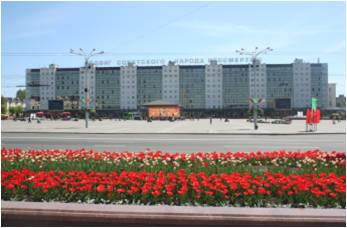
The symbol of Victory is the modern Victory Square in Vitebsk, the largest in Belarus and one of the largest in Eastern Europe. A memorial complex in honor of the liberator soldiers, partisans, and underground fighters of Vitebsk region is erected here. At the foot of the monument (three 56-meter obelisks), an eternal flame burns. Here you can also find a sculptural composition, an Alley of Glory, and a Park of Winners. Combat vehicles from the Great Patriotic War and the post-war period are exhibited in the open air.
Vitebsk region, a land of military valor, honors the feats of heroes. A memorial obelisk in honor of the courage of the heroes of the Patriotic War of 1812 was erected for the 100th anniversary of the Patriotic War with funds collected by the residents of the Vitebsk province. It is a boundary obelisk 26 meters high, crowned with a bronze double-headed eagle on a sphere.
On Chekhov Street, in an old mansion, there is a museum of the Hero of the Soviet Union Minay Shmyrev – the legendary partisan commander Batka Minay. There are many such legendary places in the Vitebsk region. For those who are not indifferent to the memory of the war, our tourist enterprises organize excursion tours to the places of military glory of the Vitebsk region.
Sports Tourism

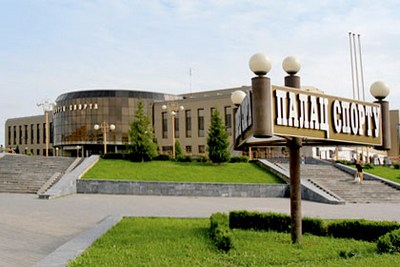
Major sports and entertainment centers have been opened in Vitebsk, Novopolotsk, Polotsk, and other cities, which are sought after by both local residents and guests. A healthy lifestyle is one of the state's priorities.
The Vitebsk Ice Palace of Sports hosts hockey matches, figure skating competitions, short track, and other ice sports. In its free time from sports events, the ice rink is used for public ice skating sessions.
The Vitebsk Central Sports Complex is one of the main venues for top-level sports competitions. The complex includes 2 heated football fields with artificial turf, an athletics arena with modern surfacing and equipment, and a specialized boxing hall.
An excellent area for active recreation has been equipped in the floodplain of the Vitba River: there are catamarans and boats, and rental points for roller skates and bicycles. International beach soccer competitions are held on the sports ground.
The Vitebsk Regional Center for Olympic Reserve in Rowing Sports has been opened in Polotsk. The training complex is equipped with modern sports equipment. The rowing center system also includes the "Parus" hotel. Its spacious and bright rooms have everything necessary for guests.
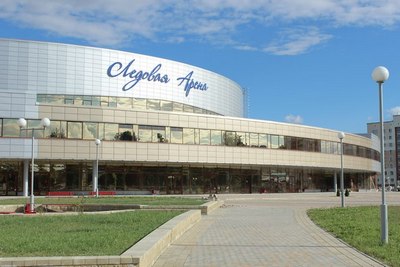
The ice arena in Orsha is among the five largest sports and entertainment facilities in the republic, impressing not only with its scale and grandeur but also with its variety of entertainment – for all tastes and ages.
A new modern illuminated ski and roller ski track with developed infrastructure and a sports training center has been built in Gorodok. A well-appointed hotel "Sportivny Gorodok" is open on the territory of the complex. It offers comfortable rooms, a conference hall, and storage space for equipment. Comfortable conditions for recreation and sports have been created.
Sports complexes and stadiums are open in cities and district centers. Tourist and sports equipment rental points and various attractions for outdoor recreation are available.
Active work is underway in our region to attract foreign athletes through agreements with foreign sports organizations and sports federations for conducting training camps and international competitions at the sports infrastructure facilities located in the Vitebsk region, as well as at sanatorium-resort and health improvement institutions.
The doors of sports facilities are always open for visitors!
Active Tourism
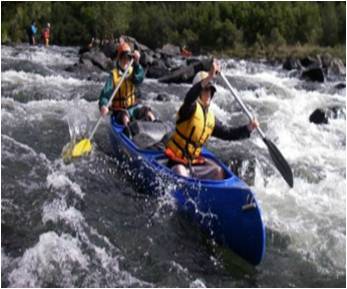
The region pays great attention to the development of active tourism of various thematic orientations: ecological, cultural and educational, culinary. Many attractive routes for horseback riding and hiking, cycling and water routes (boating, kayaking trips) have been created.
Such routes run both within the region and continue into neighboring border countries: Latvia, Lithuania, and Russia.
Event Tourism
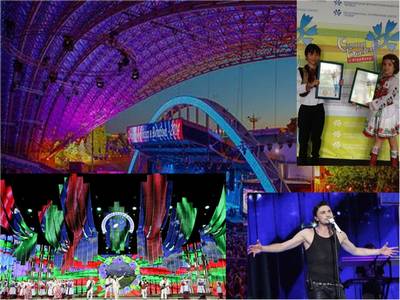
Event tourism of the Vitebsk region is about vibrant and large-scale celebrations, cultural events, conferences, symposia, contests, and, above all, festivals. Vitebsk region is rightfully considered one of the centers of the international festival movement. The "Slavianski Bazaar in Vitebsk" International Arts Festival is the visiting card of the cultural capital of Belarus. It is the most famous and popular, the most large-scale musical celebration, which takes place annually in July. Its geography covers all 5 continents. Ensembles and performers from over 65 countries have performed on the forum's stages. The best artists, world stars, recognized masters of various creative genres and directions. Modern and classical music, choreography, circus, ballet, fine arts, cinematography, theater, opera, folk songs and dances – all can be enjoyed at once only during the "Slavianski Bazaar in Vitebsk" days.

Thousands of guests and tourists visit the Vitebsk region annually. There are about 100 hotels and hotel complexes in the region. Modern, comfortable hotels and inns have been built in Orsha, Polotsk, and Vitebsk, offering services for all categories of tourists. Comfortable rooms and apartments, restaurants, parking lots. As well as hostels, motels, campsites, and tourist and camper parking sites. Active work is underway in the region to develop campsites and caravanning. Tourists visiting for recreation have an excellent opportunity to stay in their own motorhomes and receive a set of services necessary for a road traveler.
Business Tourism


Today, Belarus offers tourists not only excursions or health improvement, but also so-called MICE services (from English Meetings, Incentives, Conferences, Exhibitions – the field of business tourism industry related to the organization and conduct of various corporate events).
Business tourism combines the corporate travel industry and the meetings industry (MICE).
Business tourism is related to people who are forced to travel for professional purposes. And today, this sector of the tourism business is developing actively and dynamically, gaining an increasing share in the market every year. In Belarus, organized business tourism is still a relatively young direction, the development of which began in the mid-1990s.
Business tourism today is a very wide range of travel and trips. It can include all trips not related to idleness or passive beach holidays for pleasure, but rather those trips whose main purpose is work, even if it involves working in another country. Such trips include negotiations, corporate "contract" trips, visiting exhibitions and seminars, participating in conferences and congresses – all these are trips from which companies and enterprises derive financial benefit and profit.
The industry includes various activities from information dissemination and promotion, development of entertainment programs or content to technical support for meetings.
Business travel occupies one of the segments of individual tourism; it is created according to the individual requirements of the client company. The specifics of tour organization involve the development of a personalized program – from booking air tickets and hotels to drawing up a meeting schedule, developing a conference plan or organizing employee training, to providing transfers and an additional cultural program. Standard tour packages are fundamentally absent; each program is prepared to take into account all important details.
Vivid examples of business tourism in Vitebsk included the V corporate festival "Fakel" for amateur groups and performers of subsidiaries and organizations of OJSC "Gazprom", and an off-site seminar of the regional council of the Russian Union of Tourism Industry on the topic: "Cross-border cooperation: implementation experience, problems and prospects".
Gastronomic tourism

In recent years, significant work has been done to develop public catering facilities, including roadside services.
The development of public catering is carried out by opening specialized facilities – coffee shops, pastry shops, pizzerias, children's cafes, and others, focused on organizing services for youth and tourists, as well as fast-food and roadside service facilities.
There are more than 30 public catering facilities in the region offering Belarusian national cuisine, which feature thematic interior design – decorative elements reflecting the culture, color, and national traditions of the Belarusian people, with Belarusian national dishes prioritized in their menus.
To popularize Belarusian dishes, public catering specialists of Belkoopsoyuz have developed a collection of technological cards for old Belarusian cuisine, which has been distributed to public catering enterprises of the Vitebsk regional consumer union. Advertising stands have been produced for the enterprises subordinate to the regional consumer union.
Business entities engaged in public catering primarily use raw materials from domestic producers for preparing dishes, hold "Belarusian Cuisine" days, and pay attention to the thematic design of menus.
To position culinary heritage, a Belarusian-Latvian international technical assistance project "Improving Culinary Services in Latgale and Vitebsk Regions based on the Culinary Heritage Concept" (BELLA CUISINE) – 120 thousand euros – was implemented in the region in 2013–2014.
Within the project, representatives of agro-tourism estates and catering enterprises in the Vitebsk region visited enterprises that are members of the European Network of Culinary Heritage in the regions of Aukštaitija and Latgale. They adopted best practices in the development of gastronomic tourism, familiarized themselves with key aspects of table setting, preparation of regional culinary heritage dishes, methods of presenting national culinary traditions, as well as methods of serving and presenting dishes.
As a result, the Vitebsk region is the only one in Belarus included in the European Network of Culinary Heritage, which promotes local culinary features, traditional dishes, and recipes. Currently, the European Network has over 1500 participants from 44 European regions. Belarus is represented by five districts of the Vitebsk region: Miory, Verkhnedvinsk, Glubokoye, Polotsk, and Lepel. Over 30 catering facilities are concentrated here, offering unique dishes made from local products.
Industrial Tourism

Currently, over 20 enterprises in the Vitebsk region organize production tours for student groups, sent by educational institutions as part of career guidance work, and for other interested parties. The range of enterprises receiving tourist groups is gradually expanding, and currently includes LLC "Dvinsky Brovar", the branch "Lukomlskaya GRES" of RUP "Vitebskenergo", OJSC "Verkhnedvinsky Butter and Cheese Factory", OJSC "Rudakovo", KPUP "Vitebsk Confectionery Combine "Vitba", OJSC "Vitebsk Cardboard and Printing Combine "Pokrovsky", Novopolotsk and Glubokoye bakeries of OJSC "Vitebskhlebprom", PUP "Polotsk Beverages and Concentrates", OJSC "Vitebsk Carpets", etc.
Educational Tourism

Targeted programs for students of specialized classes (military-patriotic, ecological-biological, artistic, and other profiles) have been developed and are being implemented, which actively attract schoolchildren from Russia, introduce them to the experience of our educational institutions, and facilitate the exchange of experience in patriotic education and the formation of ecological culture.
Autotourism (or motorhome travel with accommodation in motorhomes or trailers)

Currently, there are 13 campsites (parking spaces for campers) operating in the region:
- "Losvido" campsite in Gerasimovo village (km 23 (left) of the R-115 highway), campsite at the "Piknik Park" recreation center in Drekoly village (km 17 (left) of the R-115 highway), and camper parking at the "Luch" children's health camp on the shore of Lake Shevino in Malye Lettsy village, Vitebsk district;
- campsite on Lake Vechelye in Kovalevshchina village (km 3 (right) of the H3703 highway) and campsite at the "Nikolaevsky Posad" agro-estate in Serzhany village (km 10 (right) of the R-29 highway), Ushachi district;
- autocamping for 2 vehicles at gas station No. 13 in Yezershche urban settlement (km 2 (right) of the M-8/E95 highway), Gorodok district;
- campsite at the State Institution "Lesnoye Sanatorium" in Domashkovichi village, Dokshitsy district;
- autocamping for 2 places at gas station No. 52 in the village of Vysokoye (km 65.8 (left) of the R-87 highway) and camping (camper parking) in Kopys, Orsha district;
- at the institution "Vitebsk Hockey Club" in Vitebsk;
- autocamping for 2 places at the gas station (Belorusneft-Vitebskoblnefteprodukt RUP) in the village of Nikitikha, Shumilino district;
- camping (camper parking) at the sports and tourist complex "Ozerki" of the GO "Physical Culture, Sports and Tourism of Postavy District";
- mobile camping "Mereya" in the village of Zacherevye, Miory district.